The saat pheras are the moment every guest at a Hindu wedding quietly waits for. Yet at many weddings it is also the moment when the mandap turns noisy: the priest chanting at one speed, the DJ or emcee talking over him, and relatives checking their phones. A musical phera fixes this by letting live music carry the ritual instead of competing with it.
At Kashika Events, we go one step further. Our musical phera team is sourced entirely from Varanasi (Kashi): the Vedic priest, the singers and the live band. They travel together and perform your pheras at any venue in India, from a palace in Udaipur to a banquet in Patna or a beachfront in Goa.
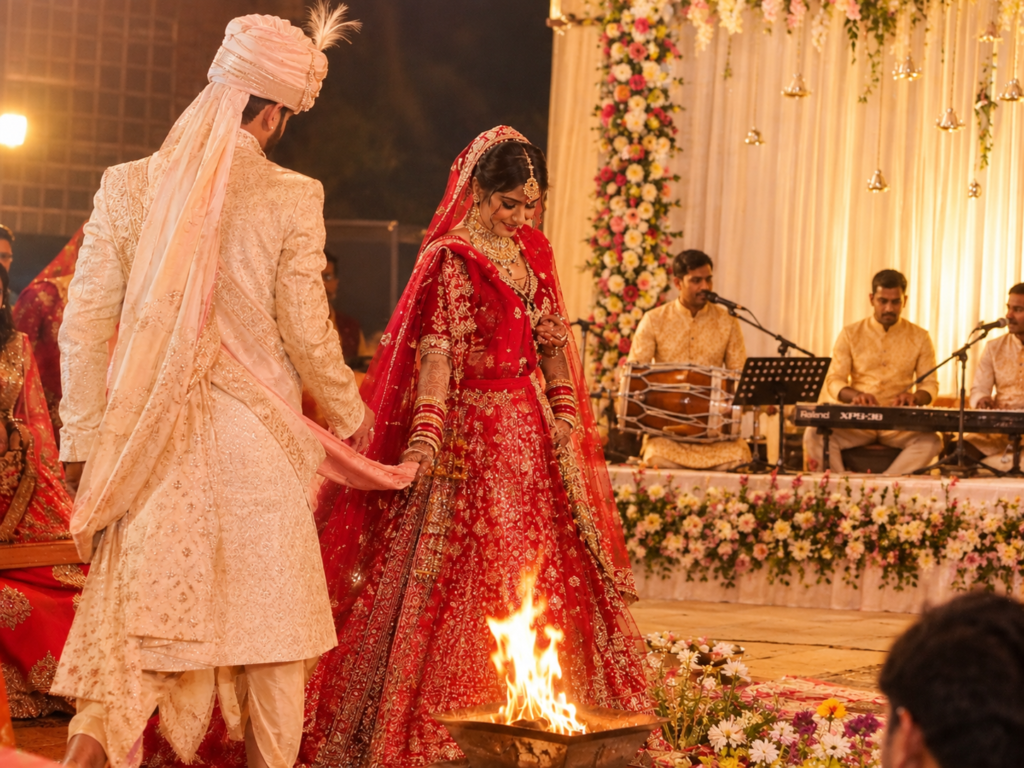
What Exactly Is a Musical Phera?
A musical phera is a wedding ceremony in which the seven rounds around the sacred fire (saat pheras) are accompanied by live singing and live instruments. Each phera has its own vow and meaning. In a musical phera, those vows are sung in a way the couple and every guest can follow and feel, while the priest completes the Vedic rituals.
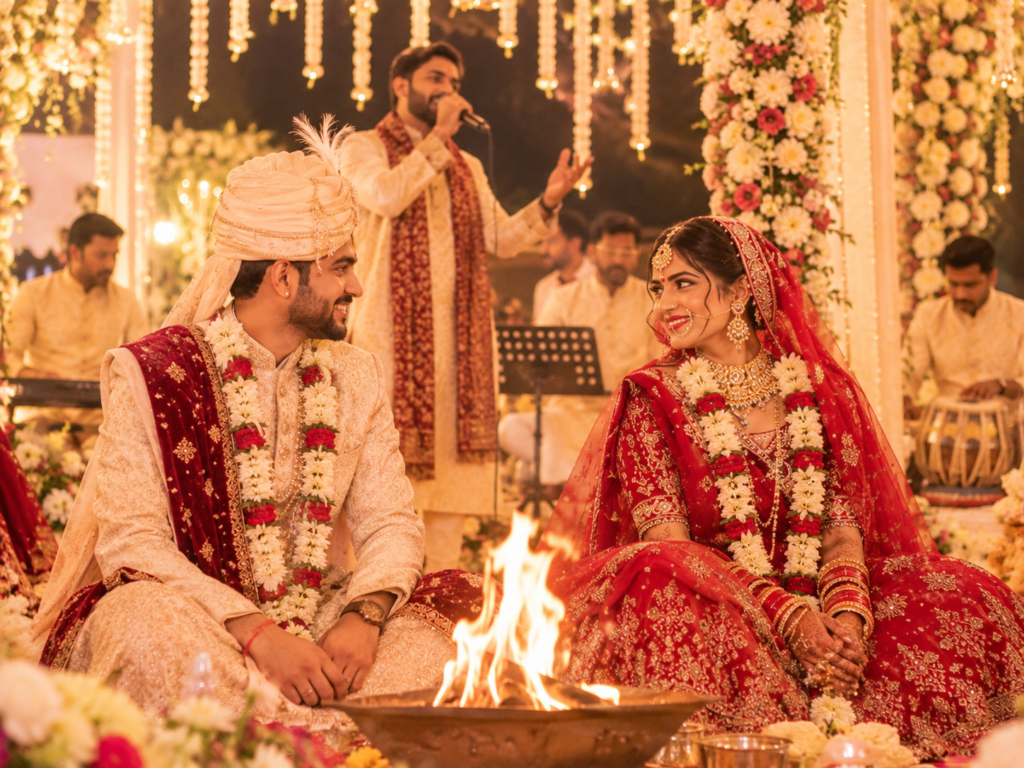
Done well, it is not a concert at the mandap. The music follows the ritual: it slows when the priest is reciting, rises gently as the couple takes each round, and goes quiet at the moments that need silence.
Why a Varanasi Team Is Different
Most musical phera offerings in the market fall into two types: a single singer with a recorded backing track, or a general entertainment artist who also does pheras as an add-on. Both can look good on stage. Neither is built around the ritual itself. A Varanasi team is different for four reasons.
1. The priest and the musicians work as one unit
Our Vedic priest and musicians rehearse and travel together. Cues are agreed in advance: when the mantra starts, when the music enters, when it stops. At weddings where the priest and the singers meet for the first time at the venue, this coordination is usually the first thing to go wrong.
2. Kashi’s own musical tradition
Varanasi is one of the oldest living centres of Indian music. The shehnai, the tabla and the sitar are all deeply tied to the city, and so are the devotional and semi-classical forms of the Banaras tradition. Our singers and instrumentalists grew up inside that tradition, so the sound at your mandap is rooted in it rather than imitated from a film soundtrack.
3. Authentic mantra and correct pronunciation
The priest is a Kashi-trained pandit who performs the full vivah sanskar in the traditional order, including Ganesh puja, Kanyadaan, Havan, Saptapadi and Sindoor. The singing never replaces the mantras. It sits alongside them and explains them.
4. One team, one point of contact
Instead of booking a priest from one place, a singer from another and a band from a third, then trying to coordinate them across three different travel plans, you deal with one team. We manage travel, stay, sound requirements and timing as a single package.
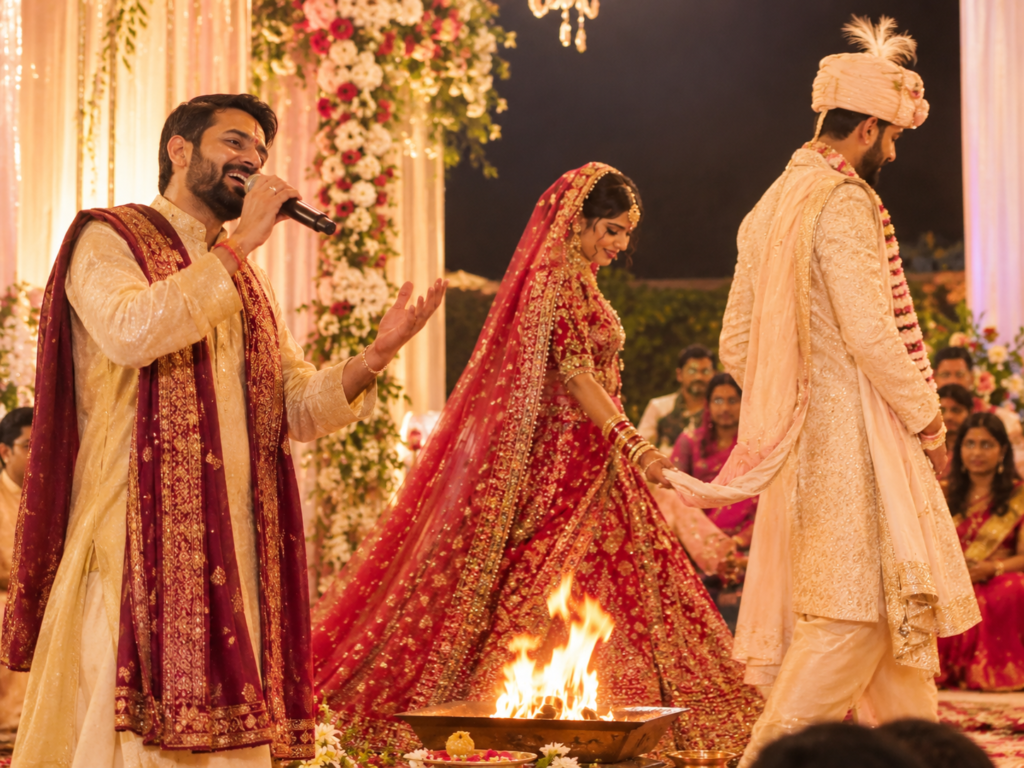
What a Kashika Musical Phera Team Includes
- Vedic priest (Pandit ji) from Varanasi: conducts the complete marriage rituals in correct Vedic order.
- Lead vocalists: trained in devotional, classical and folk singing, performing in Hindi and Sanskrit-based compositions, with regional touches such as Bhojpuri or Purvanchal folk where the family wants them.
- Live instrumentalists: typically a mix of shehnai, tabla, harmonium and other traditional instruments, depending on the format you choose.
- Sound coordination: guidance on microphones, speakers and stage placement so that the mantras stay clearly audible.
- Traditional attire: the full team dresses in coordinated traditional wear that suits the wedding theme.
The exact number of artists and the instrument line-up are customised to your guest count, venue size and budget. Ask us for the format that suits your wedding.
How the Seven Pheras Are Sung
The exact wording of the seven vows differs slightly between families and regions, but the broad meaning of each phera is widely shared. In a musical phera, each round is introduced and sung with its meaning, so the bride, groom and guests understand what is being promised.
| Phera | Broad Meaning | How the Music Responds |
|---|---|---|
| 1st | Nourishment and care for each other | Soft devotional opening, gentle instruments |
| 2nd | Strength, health and courage together | Rhythm enters with tabla |
| 3rd | Prosperity and shared effort | Fuller, brighter melody |
| 4th | Happiness, respect and harmony | Emotional, slower composition |
| 5th | Family, children and responsibility | Warm, folk-influenced tone |
| 6th | Long life and mutual discipline | Calm, steady, meditative |
| 7th | Lifelong friendship and companionship | Shehnai-led, emotional finale |
Your family priest or ours can adjust the wording to match your community’s tradition.
Who Books a Musical Phera?
- Destination wedding couples who want a ritual with real cultural weight in a new city.
- NRI and out-of-state families who want an authentic Kashi experience without travelling to Varanasi.
- Families who value tradition but also want the ceremony to feel emotional and memorable for guests.
- Luxury wedding planners looking for a ritual-first music partner rather than a general entertainer.
Pan-India Performance: How It Works
Our team is based in Varanasi and travels to wherever your wedding is. We regularly plan for venues in Delhi NCR, Uttar Pradesh, Bihar, Rajasthan, Madhya Pradesh, Maharashtra and beyond. The process is simple:
- Share your details: date, shubh muhurat, city, venue, approximate guest count and the community or tradition your family follows.
- Choose a format: we suggest a team size and line-up for the ceremony and confirm availability for your muhurat.
- Customise the ritual flow: we agree on the order of rituals, the songs, language preferences and any family-specific customs.
- Travel and stay: we handle the team’s travel and accommodation plan, so you deal with one coordinator.
- Venue sound check: before the ceremony, the team checks sound, mandap placement and cue timing with your decorator and sound vendor.
- Performance on the day: the priest and musicians perform the pheras together, from Ganesh puja to the final sindoor.
Tips to Get the Best Musical Phera Experience
- Book early for peak dates. Shubh muhurat dates are limited, and the best teams get booked for the same few dates in each season.
- Tell your decorator about the music team. Mandap layout should leave space for the priest, vocalists and instrumentalists without blocking the family or photographers.
- Keep the sound clean. Ask your sound vendor to keep the mantras clear and to balance the instruments so they never drown the priest.
- Brief your photographer and videographer. A musical phera produces some of the most emotional frames of the whole wedding, and they should know the sequence.
- Decide the language in advance. Hindi, Sanskrit-based and regional folk lines can all be blended, but the family should agree on the mix beforehand.
- Do a short rehearsal. A brief walk-through with the couple, especially for the phera movement and the cues, keeps the ceremony smooth.
Musical Phera vs Ordinary Phera: What Changes?
| Aspect | Ordinary Phera | Musical Phera by Kashika Events |
|---|---|---|
| Atmosphere | Often noisy, guests distracted | Calm, immersive, emotionally focused |
| Meaning of vows | Understood by few | Sung and explained for everyone |
| Ritual accuracy | Depends on the priest | Kashi-trained priest, full vivah sanskar |
| Music | None or recorded | Live singers and traditional instruments |
| Coordination | Separate vendors | One team, one coordinator |
Frequently Asked Questions
Does the music replace the priest’s mantras?
No. The priest completes all the mantras and rituals as usual. The singing accompanies and explains the ritual. It does not replace it.
Can you perform outside Varanasi?
Yes. The entire team travels to your venue anywhere in India. We manage the travel and stay plan so that you only have one point of contact.
Can we choose the songs and languages?
Yes. We build the programme with you, including Hindi and Sanskrit-based compositions, and regional folk where you want it. We also respect your family’s own customs and traditions.
How early should we book?
As early as your date is fixed. Auspicious muhurat dates are limited, and the same few dates are in demand across the country. For peak wedding months, booking several months ahead is safest.
How long does a musical phera ceremony last?
It depends on your family’s rituals and the muhurat window. We plan the music around the actual ritual timeline, so the ceremony does not run longer than it needs to.
Can the musical phera be combined with other Kashi rituals?
Yes. Many families pair it with Vedic Jaimal, a Banarasi-style entry or a classical music evening, so that the whole wedding carries one consistent cultural thread.
Book Your Musical Phera with Kashika Events
Your pheras are the heart of the wedding. Let them be heard, understood and remembered. Share your date, city and venue with Kashika Events, and we will check muhurat availability and suggest the right priest, singers and band for your ceremony, performing live, anywhere in India.